The Heat Ledger: What District-Heating Records Reveal Before Exchange
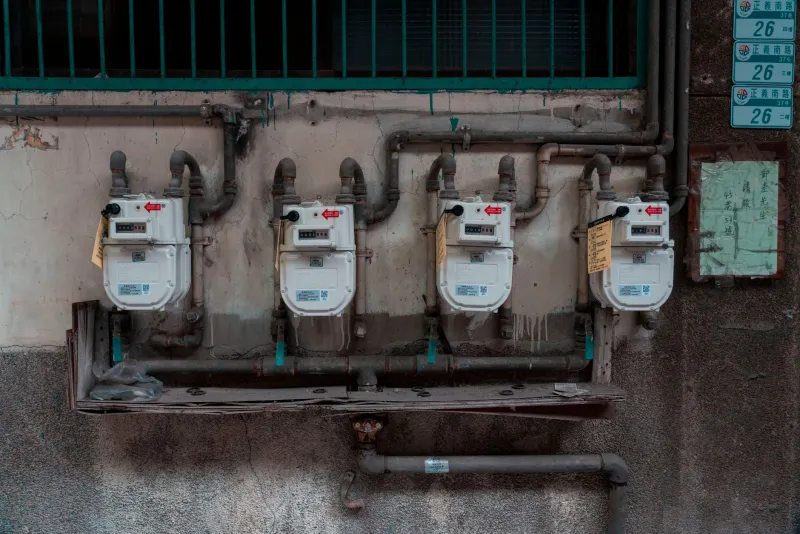
Communal heating has become a familiar feature of new-build flats and regenerated urban blocks. Heat is generated centrally, distributed through insulated pipes and measured at the dwelling or block before costs are allocated to residents. In principle, smart metering makes this arrangement more transparent: consumption can be read remotely, anomalies can be spotted earlier and residents can track use through a portal. In practice, the quality of that transparency depends on the records behind the meter. For anyone buying or renting a connected flat, the heat network deserves the same scrutiny as the service charge, the lease and the building’s digital infrastructure.
Why heat-network data belongs in the due-diligence pack
A conventional gas boiler is relatively self-contained. A heat network is not. The resident’s bill may combine consumption charges with standing charges, capacity costs, maintenance contributions and reserve-fund payments. The network itself may be operated by the landlord, a management company, an energy services company or a specialist provider. The meter may be inside the flat, in a communal cupboard or replaced by a heat cost allocator that apportions shared consumption. Each of these arrangements affects what can be verified and what must simply be taken on trust.
With heat-network regulation continuing to develop in 2026, the direction of travel is towards clearer consumer protection and more consistent standards. That is welcome, but it does not remove the need for property-level checks. A buyer should not assume that a smart meter, a polished resident app or a monthly direct debit is evidence of fair and accurate billing.
The documents to request early
Requests should go through the solicitor or conveyancer as part of the standard enquiries, and renters should ask before signing a tenancy. The aim is to build a heat ledger for the property: a documented trail from meter reading to invoice. Useful items include:
- consumption history for the flat, ideally covering at least twelve months and preferably two heating seasons;
- the current tariff schedule, including unit rates, standing charges and any capacity or availability charges;
- the allocation method where individual metering is not present, including how communal losses and shared areas are treated;
- outage and interruption records for the network, with durations and any compensation arrangements;
- maintenance and repair records for the heat interface unit and associated equipment;
- the contract between the building and the heat supplier, including term, exit arrangements and any exclusivity provisions;
- data-access terms covering the resident portal, retention periods and the resident’s right to export or obtain readings;
- the complaints procedure and the body responsible for final dispute resolution.
Reading consumption history like a sceptic
A single year of figures can be misleading. Ask for monthly or, where available, interval readings across more than one heating season. Compare winter and summer use, and ask whether any readings were estimated rather than measured. Estimated readings are not automatically a problem, but they should be identified and later reconciled. Check that the meter serial number on the invoice matches the meter serving the property. If the flat uses a heat cost allocator rather than a direct meter, ask for the calculation method and the date of the last calibration or adjustment.
It is also worth comparing the portal display with the invoices. If the resident app shows one figure and the bill shows another, establish which is authoritative. A connected system should reduce this kind of ambiguity, not add to it.
Standing charges and the full cost stack
Heat-network bills are not simply a matter of kilowatt-hours. Fixed charges can reflect the capital cost of the network, ongoing maintenance, insurance, metering and administration. Some schemes include a minimum charge or a standing charge that applies even when consumption is low. These are not necessarily unreasonable, but they should be visible before exchange. Ask for a worked example based on the flat’s recent consumption, and compare it with the service charge budget to ensure the same costs are not being recovered twice.
Outages, reliability and the connected block
A heat network is shared infrastructure. When it fails, individual flats may lose heating and hot water even if their own equipment is working. Request a record of unplanned outages and planned shutdowns, together with the supplier’s response times and any compensation policy. For connected flats, ask whether the heat interface unit depends on electrical power, broadband or a building management system, and what happens during a power cut or network outage. These questions are particularly important in blocks where residents are older, where working from home is common or where the heating system also serves communal areas.
Data access is part of the deal
Smart heat data can be useful for budgeting, but it also raises questions about custody and control. Who owns the readings? Can the resident download a full history? How long is it retained? What happens to the data when the flat is sold or the tenancy ends? Does the supplier share consumption data with the landlord or management company, and on what basis? These points should be set out in the data-access terms rather than left to the portal’s privacy notice. A buyer should also confirm that historic consumption data can be transferred with the property, because a new occupant may need it to challenge an estimated bill or to understand the building’s performance.
Where transparency ends and verification begins
Smart metering improves the resolution of heat data, but it does not by itself prove that the tariff, allocation method or standing charges are correct. Residents can see what the meter records; they cannot always independently verify how that reading becomes a bill. The practical response is to ask for the calculation method in writing, to check that invoices reconcile with meter data and to establish what audit rights exist. In a leasehold context, the service charge accounts may provide a route to challenge costs, but the heat contract and the data terms will determine how much evidence is available.
A sensible sequence before committing
Start early. Ask the solicitor to raise heat-network enquiries at the same time as the standard leasehold pack. Obtain the consumption history and tariff schedule, then compare them with the energy performance certificate, the service charge budget and any building documentation. Ask for written answers to specific questions rather than accepting a generic supplier brochure. If the network is complex or the charges are material, consider instructing a surveyor or consultant with heat-network experience. Keep copies of the portal data and invoices, because access may change after completion.
A warm flat is not, on its own, evidence of a fair heat bill. The ledger behind the meter is what allows a buyer or renter to judge whether the connected system is delivering genuine transparency or simply a more polished version of the same old uncertainty.