The Amps Behind the Address: Reading Local Grid Capacity Before You Buy
Photo: Colin Madge, CC BY-SA 2.0, via Wikimedia Commons
A decade ago, the electrical supply to a home was a background detail — something an electrician glanced at during a survey and rarely mentioned again. That has changed. As heat pumps, induction hobs and home charging move from optional extras to expected features, the capacity of the local network has become a practical constraint on what a property can actually do. For buyers and renters, it is now a due-diligence question in its own right.
Capacity as a property characteristic
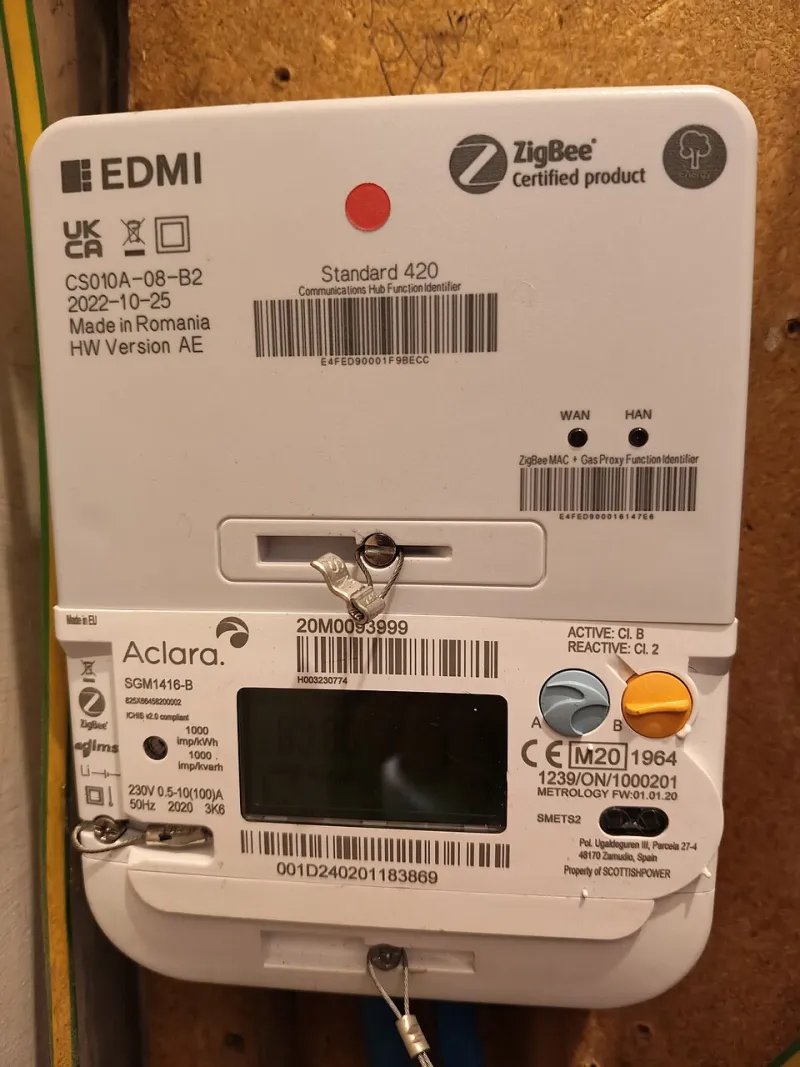
The headline figure is straightforward: how much electricity can this address draw, and at what cost can that figure be raised? Most older UK homes sit on a single-phase supply with an 80-amp or 100-amp fuse. That is generally sufficient for a gas-heated house with an electric oven. It becomes tight when a 7kW heat pump, a 7.4kW car charger and an electric shower are all drawing at once, and the arithmetic of a three-phase upgrade or a new service cable is neither quick nor cheap.
The practical consequence is that two outwardly similar houses on the same street can carry quite different future costs. One may sit close to a substation with spare headroom; another may be at the end of a long low-voltage run already carrying more load than the network operator would like. The difference rarely appears in an estate agent's particulars, but it is discoverable.
Reading a capacity map for what it is
Most distribution network operators — UK Power Networks, Northern Powergrid, SP Energy Networks, Electricity North West, SSEN and NGED — now publish interactive capacity maps. These show, at postcode or substation level, an indication of available headroom and of areas where connection applications are constrained or queued.
The maps are a useful first filter, not a verdict. Their figures are modelled, often at a level of aggregation that says little about an individual service cable, and headroom may already be allocated to developers who have applied but not yet connected. A map showing green does not guarantee that a particular property can add 10kW without an application; a map showing amber does not mean the property is unserviceable, only that an upgrade is likely to be slower and more expensive.
Treat the map as a prompt for a formal enquiry. The definitive answer comes from the network operator's own connection application, or from a competent electrician's maximum demand assessment carried out to BS 7671.
The developer's load arithmetic
In new-build situations, the relevant question shifts from the street to the building. Developers size the electricity connection for a block using assumed loads for each dwelling, adjusted by diversity factors. Those assumptions matter enormously. A scheme modelled on gas heating and low EV uptake may be connected at a capacity that leaves little room for residents who later install heat pumps or chargers.
Ask the developer, in writing, for the electrical design statement or the maximum demand calculation behind the connection. Ask what headroom has been retained for future electrification, and whether the building's own infrastructure — risers, sub-mains, distribution boards — can accommodate additional load even if the incoming supply can.
Shared supplies deserve particular attention. Some blocks are served by a single point of connection with a private distribution network, and the capacity available to each flat is a function of the landlord's or management company's design rather than the network operator's. If the building's supply is close to its design maximum, individual residents may find that permission for a charger is refused not on safety grounds but on capacity grounds — and that refusal may be entirely lawful.
Where older properties hide the risk
Looped services remain common in terraced housing, where two properties share a single service cable from the main. This arrangement can complicate metering changes and upgrades, because work on one supply may affect the neighbour. It is worth asking an electrician explicitly whether the service is looped, and what that would mean for a heat pump or charger installation.
Similarly, a long private cable or an outbuilding supply may have been sized for a modest load and cannot simply be enlarged without trenching. These are quotable costs, and they belong in the budget before an offer is made, not after.
Questions to put in writing before exchange
- What is the rating of the incoming fuse, and is the supply single-phase or three-phase?
- Is the service looped with a neighbouring property?
- Has a maximum demand assessment been carried out for the property as it stands?
- For a new build, what load assumptions underpin the block's connection, and what headroom is retained?
- Is there an existing connection application or queue position attached to the address?
- What would a heat pump and a 7kW charger require, and has the network operator confirmed it?
Renters have less leverage, but not none. It is reasonable to ask the landlord or agent whether the supply has been assessed for a charger, and whether the tenancy permits one. In a block with a shared supply, the answer may be determined by the building's design rather than the individual flat.
Timing is part of the cost
Connection applications and upgrades are not instantaneous. In unconstrained areas, a straightforward domestic upgrade may take weeks; in constrained areas, applications can sit in queues for far longer. A property that is perfect in every other respect may still be the wrong purchase if the intended electrification depends on a network upgrade with no firm date. Establishing that timeline early is more useful than discovering it during conveyancing.
The grid next door is not visible from the pavement, but it shapes what a home can become. Reading it carefully — and asking for the figures rather than the reassurance — is now part of buying and renting well.