Fibre to the Flat, Not the Postcode: How to Test Connectivity Before You Commit
Most buyers treat broadband as an afterthought: a utility to be ordered once the keys are in hand. It is a curious way to behave. We would not accept a house without knowing whether the drainage connects to a public sewer, yet many of us exchange contracts on the strength of a postcode checker that describes the street corner rather than the spare bedroom where the desk will go.
The analogy is not rhetorical. Connectivity is infrastructure, and like any infrastructure it can be present at the boundary and absent at the point of use. What follows is a sequence of checks that can be completed in an afternoon and a handful of emails, and that are considerably easier to carry out before exchange than afterwards.
“Up to” describes a ceiling, not a promise
Advertising speeds are quoted as maxima. They tell you what the fastest package on the network might deliver under favourable conditions, not what a particular flat will receive. Since 2024, suppliers have been required to publish standardised contract information in a fixed format, which makes comparison simpler, but the numbers still describe a product rather than a property.
The distinction matters most in converted buildings, in rural edge-of-settlement schemes and in apartment blocks where a single connection is shared through internal cabling of uncertain age. In each case, the technology reaching the building may be excellent while the last fifty metres quietly undo it.
Step one: identify the technology, not the brand
Ignore the word “fibre” on its own. It has been used to describe part-copper services for years and remains one of the least informative terms in the industry.
The question to ask is whether full fibre — fibre to the premises — reaches the individual flat, or whether the building is served by fibre to the cabinet with copper thereafter, by a cable network, or by a fixed wireless link. Fixed wireless has its place in hard-to-reach areas, but its performance varies with line of sight and weather in ways that a fixed line does not.
Two checks are worth running. The first is the regulator's coverage checker, which will indicate what is available and what is planned. The second is a search of independent trackers that record build progress by exchange and postcode, which will often show a full-fibre rollout in progress before any retailer will sell it to you. A scheme “coming soon” is not a scheme you can rely on for a completion date.
Step two: the building, not just the address
This is where most due diligence stops and most problems begin.
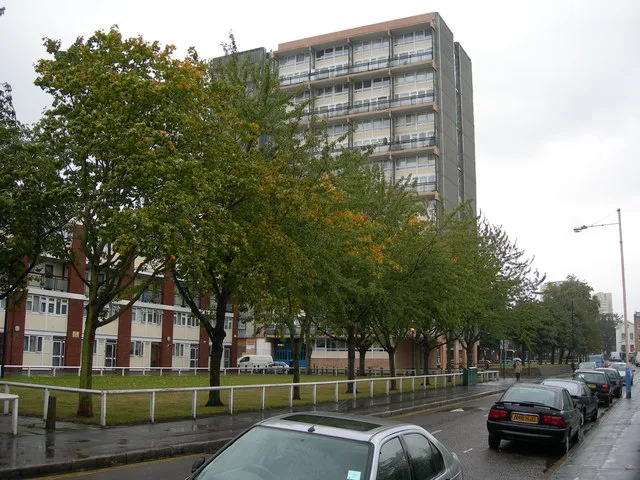
In a block of flats, the relevant questions are about internal infrastructure. Where does the incoming service terminate? Is there a communications cupboard or riser, and who controls access to it? Has the freeholder or a managing agent signed an exclusivity arrangement with a single provider, and if so, how long does it run and can residents choose another supplier?
Exclusivity deals are not automatically bad — they can fund a building-wide upgrade that no individual leaseholder would pay for alone — but they do limit choice and can affect price. Ask to see the agreement or at least its term and scope. Where an alternative network operator has cabled the building, confirm that the service is live and orderable at your specific flat number, not merely that the estate appears on the operator's map.
Also ask who is responsible for the cabling within the building. On some new schemes the developer installs a full internal fibre infrastructure; on others each resident is expected to arrange their own connection and any subsequent repair.
Step three: inside the flat
When you view, take a phone and run a speed test — but understand its limits. A 4G or 5G result on a handset says nothing about the fixed line, and a fixed-line test in an empty property may not be possible at all if service has been ceased.
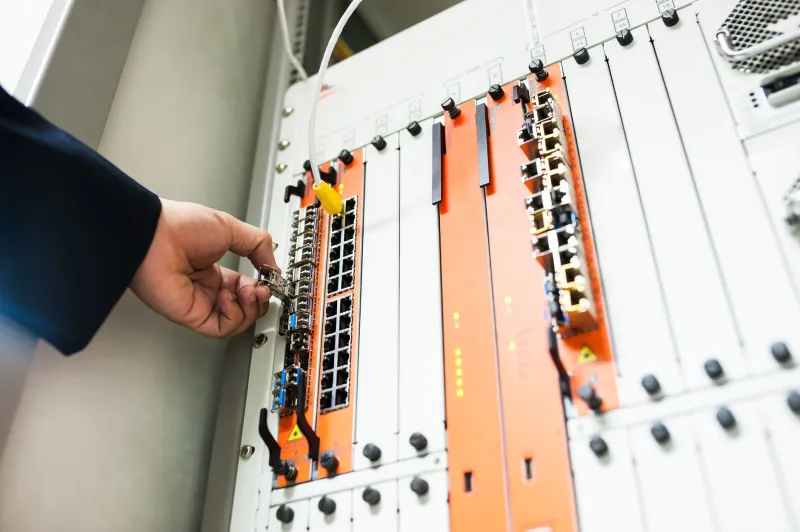
What you can establish is physical. Find the master socket or optical termination point and note where it sits. Is it in a hallway cupboard, a utility space, or behind a wardrobe in the second bedroom? Location determines how much disruption a working-from-home setup will require, and whether the router can reach the rooms that need it. Check for network cabling between rooms if the property is a recent build; where it exists, ask whether it is terminated and tested or simply clipped into the wall.
If the property is occupied, ask the seller or letting agent for a recent speed test at a stated time of day, and for the name of the package. Peak-hour performance and midday performance are different measurements, and the former is the one that matters.
Step four: mobile coverage and the second line
Indoor mobile coverage is a separate question from fixed broadband and deserves its own check. The regulator publishes signal predictions by postcode and by outdoor and indoor use, but predictions are predictions. If voice calls from the kitchen matter, test them in the kitchen.
It is also worth deciding whether you need resilience. Two connections from different technologies — a fixed line plus a mobile router — cost more but will survive a single point of failure. For anyone whose income depends on a reliable connection, that redundancy is a design decision rather than a luxury.
Step five: put it in writing before exchange
Where a property is being bought from a developer or is part of a new estate, written confirmation is reasonable and usually forthcoming. Ask specifically:
- Which networks are live at the property today, and which are planned?
- Is the internal fibre infrastructure complete and tested in this unit?
- Is there any exclusivity or bulk agreement affecting the building?
- Is any connectivity cost included in the service charge or estate rentcharge?
- If the building has connected systems, which connection do they depend on?
That last point is increasingly relevant. Where door entry, heating controls or leak detection rely on a building-wide network, the resilience of the communal connection becomes a service-charge matter rather than a personal one.
If you are renting
Tenants have less leverage but the same interest. Ask which provider the flat is set up for, whether the landlord permits an installation that requires drilling, and whether the building has an exclusivity arrangement. If a “bills included” package covers broadband, check what speed is actually provided and whether you may upgrade at your own cost.
None of this requires specialist knowledge. It requires treating connectivity as part of the fabric of the property — as legitimate a subject for a surveyor's question as damp or drainage. The connection you inherit will shape daily life more than most of the things that appear in a survey, and it is considerably cheaper to interrogate now than to explain to an installer later.