The Last Metre Matters: Auditing Delivery and Access Before You Commit
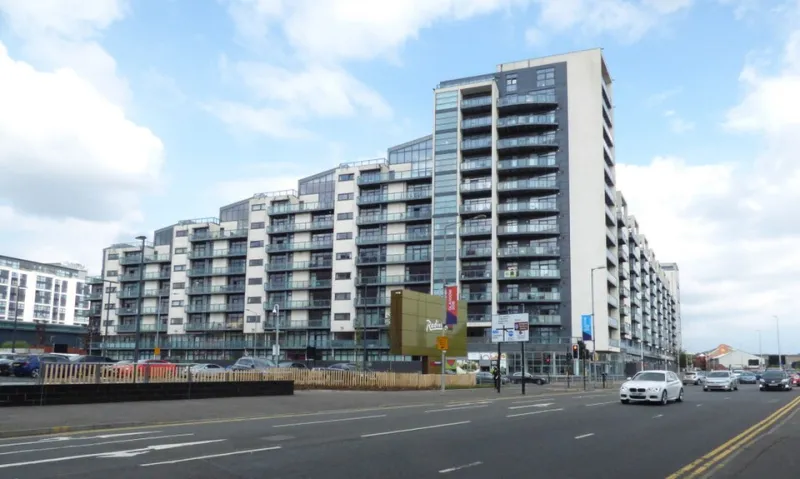
Photo: Thomas Nugent , CC BY-SA 2.0, via Wikimedia Commons
Why the last metre deserves a viewing of its own
A property viewing tends to concentrate on the things that are easy to see: room proportions, natural light, the condition of the kitchen. The journey a parcel makes from the street to your front door is rarely given the same attention. Yet in a growing number of UK flats and new-build estates, that journey depends on a chain of smart access systems, parcel lockers, concierge arrangements and courier apps. When the chain works, it is invisible. When it fails, it can turn a routine online order into a source of frustration, missed deliveries and disputes over service charges.
For buyers and renters alike, delivery infrastructure is now part of the practical value of a home. It is also part of the building’s management and data story. The sensible approach in 2026 is to treat the last metre as a due-diligence item in its own right, alongside broadband, acoustics and service charges.
Start at the entrance, not the brochure
Begin with the point where a courier, visitor or resident actually enters. In a leasehold block, this may bea communal door with a keypad, fob reader, video entry panel or intercom linked to a resident app. On a new-build estate, it may be a shared parcel point, a delivery bay or a gate controlled by a management company.
Ask for a demonstration rather than a description. If the agent or developer cannot show you how a courier gains access, that is itself useful information. Check whether the entry system has a clear visitor process: can you release a door remotely, issue a temporary code, or speak to someone at the panel? Is there a fallback if the app is unavailable or the internet connection drops? For accessible entry, consider whether the panel is reachable from a wheelchair or pushchair, whether instructions are available in large print or audio, and whether the door can be opened without needing to hold a phone in one hand.
Outside, look for the unglamorous details. Is there space for a delivery van to stop without blocking the road? Is there a loading bay, and is it enforced? Are there steps between the gate and the parcel point? These are the practical constraints that determine whether a delivery can be completed at all.
The parcel locker in practice
A parcel locker can be a genuine amenity, but only if it is sized, located and managed for the building it serves. Ask how many locker compartments there are relative to the number of homes. A bank of lockers that looks generous during a quiet midweek viewing may be overwhelmed in December or during a local online sales event.
Check the user experience from a resident’s perspective. How are you notified that a parcel has arrived? Is the notification through an app, email or SMS, and can you opt out? What happens if a parcel is too large for the locker? Is there a concierge or a secure room, or does the courier simply leave a card? Ask how long parcels can remain in the locker before they are removed, and who is responsible for that process. If the locker is outsourced to a third-party network, find out what happens if that provider changes or withdraws.
For renters, confirm whether access to the locker is included in the rent or requires a separate subscription. For buyers, ask whether the locker is part of the common parts and how its maintenance is funded. A locker that is not maintained is not an amenity; it is a future service-charge line item.
Apps, data and permissions
Smart access systems often come with an app, and the app often asks for more than a door-opening function needs. Before you commit, ask what data the system collects, who controls it and how long it is retained. A resident app may record entry events, visitor details, delivery notifications and contact information. Some systems share limited data with couriers or locker networks. That can be legitimate, but it should be explained clearly.
Ask whether the app is required or optional. If it is required, what happens if you do not own a smartphone, or if you change your phone number? Are there physical alternatives such as a fob or key? Check the permissions the app requests and whether the developer or managing agent has a written policy covering data protection, security updates and software support. Under UK data protection law, residents should be able to understand what happens to their information. A vague answer at the viewing stage is worth pursuing before exchange.
Failure modes and management responsibility
Every access system has failure modes. The useful question is not whether they exist, but who responds and how quickly. Ask what happens during a power cut, a broadband outage or a software fault. Is there a manual release, a key-safe or a staffed fallback? If the building relies on a concierge, what are the staffed hours, and who covers deliveries outside them?
Establish who manages the system day to day. In a leasehold block, this may be the managing agent, a residents’ management company or a specialist contractor. Ask for the delivery and access policy in writing. It should cover courier access, failed deliveries, storage of parcels, visitor management and the process for reporting faults. If the property is part of a new-build estate with a management company, check whether delivery infrastructure is covered by the estate charge and how residents can raise issues.
The cost question
Delivery infrastructure is rarely free. It may be funded through the service charge, an estate charge, a separate subscription or a combination of all three. Ask for a breakdown. What does the locker or access system cost per year, and how is that cost apportioned? Are there planned replacement costs for hardware or software? What happens if the system becomes obsolete or the supplier withdraws support?
For renters, check whether any delivery-related service is included in the advertised rent or added later. For buyers, look beyond the first year. A smart access system that is cheap to install but expensive to maintain can become a recurring burden. The same applies to concierge hours: a reception desk that looks like a premium service may be trimmed once the development is fully occupied.
A practical viewing checklist
Bring a short list to the viewing. Ask to see the parcel locker and the entry panel in operation. Send yourself a small test parcel if the seller or landlord permits it, or ask the agent to arrange a demonstration delivery. Speak to a resident if you can, and ask how deliveries have worked in practice. Check the location of the locker relative to the door, the lift and the bin store. Look for signs of overflow, damaged compartments or abandoned parcels.
Ask for the delivery policy, the data policy and the service-charge breakdown in writing. Confirm the staffed hours, the fault-reporting process and the fallback arrangements. If the answers are incomplete, treat that as a reason to ask more questions rather than a reason to walk away. The last metre is a small part of a property, but it is a good test of how well the building is managed.
In 2026, a connected home is only as useful as its weakest access point. Auditing delivery infrastructure before you move in is not about expecting perfection. It is about knowing what you are buying into, what it will cost and who will answer when the locker screen goes blank.